
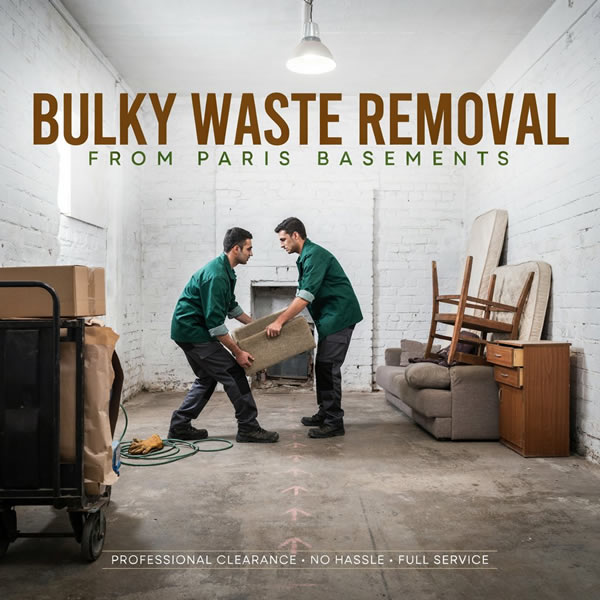
Getting rid of bulky waste from basements in Paris might seem like a bit of a puzzle, but it’s totally manageable once you know the ropes. Essentially, it boils down to understanding what the city considers “bulky,” knowing the proper channels for disposal, and often, getting a bit of help. It’s a system designed to keep the city clean and functional, and for residents, it’s about being informed and taking the right steps to clear out those unused items.
Understanding Bulky Waste: What Qualifies for Removal from Parisian Basements?
When we talk about bulky waste in Paris, we’re generally referring to items that are too large or too heavy to fit into your standard household waste bins. This isn’t your everyday trash or recycling. Think bigger. The city has specific guidelines on what it will collect as bulky waste, and these are important to grasp before you even think about moving anything.
Defining “Encombrants” in Paris
In French, these items are called “encombrants.” This term specifically covers household items that, due to their size or weight, require special collection. It’s not just a general category for anything you want to throw away; there are distinct parameters. The primary goal is to prevent these large items from ending up on sidewalks, obstructing pedestrian traffic, or creating unsightly piles that detract from the city’s beauty.
Size and Weight Restrictions
Parisian authorities have practical limitations on what they can physically collect. While exact dimensions can vary slightly depending on the specific arrondissement and the collection service, generally, items should be manageable by one or two collectors without specialized heavy lifting equipment. This means things like a small bookshelf, a dismantled table, or a mattress usually qualify. Items that are excessively heavy or require mechanical lifting equipment are often outside the scope of standard bulky waste collection and might need a specialized private service. It’s always a good idea to check with your local mairie or the city’s waste management department for the most precise current restrictions.
Exclusions from Bulky Waste Collection
It’s just as important to know what doesn’t qualify. Hazardous materials, for instance, are a firm no. This includes paints, solvents, chemicals, batteries, and electronics (which have their own dedicated recycling streams, known as DEEE – Déchets d’Équipement Électrique et Électronique). Construction debris, like bricks, tiles, or plasterboard, also falls outside the bulky waste category. Furthermore, car parts, tires, and large quantities of garden waste are typically not accepted. The city’s system is designed for household items, not commercial or industrial waste, and certainly not anything that poses a health or environmental risk in a standard collection.
Common Types of Bulky Waste Found in Paris Basements
Basements in Paris, whether they’re ancient stone cellars or more modern storage units, tend to accumulate a fascinating array of forgotten items over the years. These spaces often become unintended long-term storage for things that don’t quite fit into the living areas upstairs.
Old Furniture and Household Appliances
This is probably the most frequent category. Think of those old chairs that have seen better days, the wobbly table that was replaced years ago, or a dismantled bed frame. Mattresses and box springs are also very common. As for appliances, defunct washing machines, old refrigerators (especially smaller, older models), and broken dishwashers often find their final resting place in the basement before their eventual removal. These are classic “encombrants” and are usually straightforward to dispose of through the proper channels.
Books, Papers, and Textiles
While not traditionally “bulky” in the same sense as furniture, large quantities of old books, archives of papers, and bags of textiles can collectively become bulky and heavy. If they’ve been stored in a damp Parisian basement for a long time, they might also be moldy or water-damaged, making them unsuitable for donation and necessitating proper disposal. Although paper and textiles often have recycling options, when they’re in vast quantities or compromised condition, they might be handled differently.
Miscellaneous Items and Clutter
Beyond the obvious, Parisian basements are often treasure troves of miscellaneous clutter. This can include old bicycles that haven’t been ridden in decades, broken garden tools, old luggage, disused sports equipment, and various boxes filled with items that once seemed important but now just gather dust. Sometimes, you might even find remnants of past renovations, like old shelving units or pieces of wooden planks, which, if not excessive, can also be part of a bulky waste collection.
Legal Regulations and Guidelines for Bulky Waste Disposal in Paris
Navigating waste disposal in a city like Paris always involves understanding local regulations. The city takes its cleanliness seriously, and there are clear rules in place to ensure bulky waste is managed responsibly. Ignoring these can lead to fines and, more importantly, contribute to an untidy urban environment.
The Role of the Mairie d’Arrondissement
Each of Paris’s 20 arrondissements plays a crucial role in local waste management. While the overall framework is set by the city, your specific mairie d’arrondissement is your primary point of contact for details on bulky waste collection in your area. They publish schedules, provide contact information for scheduling collections, and can clarify any specific local nuances to the rules. It’s always best to check their official website or give them a call.
Collection Schedules and Procedures
Paris operates on a scheduled collection system for bulky waste. This isn’t a free-for-all where you can just dump items on the sidewalk whenever you please. Typically, each street or neighborhood has a designated day or days for bulky waste collection. You usually need to request a collection in advance, either online through the city’s website or by phone. Once scheduled, you’ll be instructed on when and where to place your items – usually on the sidewalk directly in front of your building, but not so early that they become an obstruction for days. Placing items out too early or on non-collection days can result in a fine.
Penalties for Illegal Dumping
Paris has strict penalties for illegal dumping, or “dépôt sauvage.” If you’re caught leaving bulky items on the street outside of the designated collection times or without prior arrangement, you could face a significant fine. The city uses surveillance and patrols to enforce these rules. The intent is clear: responsible disposal is not just encouraged, it’s legally mandated, and it’s a shared responsibility to keep the city clean and accessible for everyone.
Step-by-Step Process for Removing Bulky Waste from Basements in Paris
Once you’ve identified your bulky waste and understood the rules, the actual removal process can begin. It involves a bit of planning and some physical effort, especially when dealing with basement access.
Assessing Your Basement and Items
Start by taking a thorough inventory of what you need to remove. This helps you determine the volume and weight of the items. Consider the access points: how wide are the basement stairs? Are there tight corners? Is there an elevator, or will everything need to be carried up manually? This assessment will inform whether you can handle the removal yourself or if you’ll need professional help. It’s also a good time to separate items that might be recyclable (like metal or wood) or potentially donatable from those that are strictly bulky waste.
Arranging for Collection (Public vs. Private)
You have two main paths here:
- City Collection: For items that qualify, contact your mairie d’arrondissement or use the city’s online service to schedule a collection. Be prepared to provide details about the type and quantity of items. They will give you a specific date and instructions on where to place the items for pickup. Remember, you’re responsible for getting the items from your basement to the designated collection point on the street.
- Private Service: If you have a large volume of items, particularly heavy ones, or items that don’t qualify for city collection (like construction debris or excessive quantities), a private bulky waste removal company is your best bet. These services will often come into your basement, haul everything out, and dispose of it properly, saving you a lot of heavy lifting and logistical hassle. This is particularly useful for those without the physical capacity or the time to manage the removal themselves.
Preparing Items for Removal
Before collection day, ensure all items are as dismantled and manageable as possible. Break down old furniture if you can. If you’re using a private service, they might handle some of this, but it’s still helpful to have things ready. For city collection, ensure items are safely positioned on the street, not blocking pedestrian flow or vehicle access, and not too far from your building as to cause confusion about their origin. If the items are dusty or dirty from basement storage, a quick wipe down can also be courteous.
Choosing the Right Bulky Waste Removal Service in Paris
While the city’s free collection service is excellent for standard items, there are many situations where a private service makes more sense. Selecting the right one is key to a smooth and stress-free experience.
When to Opt for a Private Service
Consider a private service if:
- You have items that don’t qualify for city collection (e.g., hazardous waste, construction debris, very large quantities).
- You need items removed from inside your basement, rather than just from the curb.
- You have a tight deadline for removal.
- You’re physically unable to move heavy items yourself.
- You prefer a more convenient, comprehensive service.
Key Factors to Consider
When evaluating private removal services, look for:
- Reputation and Reviews: Check online reviews and ask for recommendations. A reliable company will have positive feedback.
- Licensing and Insurance: Ensure they are properly licensed to operate in Paris and have insurance to cover any potential damages during the removal process.
- Pricing Structure: Get a clear, upfront quote. Some charge by volume, others by item, or a flat fee. Understand what’s included in the price – labor, disposal fees, etc.
- Disposal Practices: Inquire about their disposal methods. Reputable companies will prioritize recycling and environmentally responsible disposal over simply dumping items in a landfill.
- Availability and Flexibility: Can they work around your schedule? Do they offer emergency or expedited services if needed?
Getting Quotes and Comparing Options
Don’t settle for the first quote you receive. Contact several different companies, explain your needs clearly, and get detailed written estimates. Compare not just the price, but also what each service includes, their availability, and their commitment to responsible disposal. A slightly higher price might be worth it for peace of mind and ethical practices.
Environmental Benefits of Proper Bulky Waste Disposal in Urban Areas
Beyond the immediate visual improvement, properly disposing of bulky waste, especially in densely populated cities like Paris, carries significant environmental advantages. It’s a crucial part of sustainable urban living.
Reducing Landfill Burden
Every item that can be recycled or repurposed means one less item ending up in a landfill. Landfills are finite resources, and reducing the amount of waste sent to them conserves space and minimizes the environmental footprint associated with waste decomposition, such as methane gas emissions. When bulky waste is improperly disposed of and just left on the street, it often ends up going straight to landfill without any chance of sorting or recycling, increasing the burden.
Promoting Recycling and Resource Recovery
Many components of bulky waste, like metal from old appliances, wood from furniture, and certain plastics, are valuable resources. When these items are processed through proper channels, these materials can be extracted, recycled, and used to create new products. This reduces the need for virgin raw materials, saving energy and natural resources. Services that explicitly commit to recycling bulky waste contribute directly to a circular economy.
Preventing Pollution and Hazardous Exposure
Improperly discarded bulky waste can lead to various forms of pollution. Old appliances might contain refrigerants or other chemicals that, if released, are harmful to the atmosphere. Paints and solvents, if not disposed of correctly, can leach into soil and water systems. By using designated collection points and specialized disposal services, these potentially hazardous materials are handled safely, preventing environmental contamination and protecting public health.
Tips for Preventing Bulky Waste Accumulation in Your Paris Basement
The best way to deal with bulky waste is to minimize its accumulation in the first place. A proactive approach can save you a lot of hassle down the line.
Regular Decluttering and Inventory Checks
Make it a habit to periodically go through your basement. Even a quick check once or twice a year can prevent a mountain of items from building up. Ask yourself if you truly need or use each item. If something has been sitting untouched for years, it might be time to let it go.
“One In, One Out” Rule
For certain items, especially furniture or appliances, try to adopt a “one in, one out” policy. When you buy a new couch, make arrangements for the old one to be removed before the new one arrives. This prevents the old item from simply migrating to the basement to gather dust.
Donating and Selling Usable Items
Before something becomes “waste,” consider if it still has value. Paris has various charities, second-hand shops (dépôt-ventes), and online marketplaces where you can donate or sell usable items. This gives your old belongings a second life, reduces waste, and can even put a little money in your pocket. Even slightly damaged furniture might be useful to someone who enjoys upcycling or repairs.
Using Local Recycling Centers (Déchetteries)
Paris and its surrounding areas have several municipal recycling centers (déchetteries) where residents can drop off a wider range of items, including some bulky waste, electronics, and hazardous materials, free of charge. These centers are excellent for managing items as they come up, rather than waiting for them to pile up in your basement. Check the city’s website or your local mairie for locations and accepted items. Using these facilities regularly can significantly reduce the amount of bulky waste that needs special collection from your home.
FAQs Bulky Waste Removal
from Basements in Paris
What qualifies as bulky waste for removal from Parisian basements?
Bulky waste typically includes large household items that are too big for regular trash collection, such as old furniture, mattresses, large appliances, and construction debris. In Paris, these items must meet specific size and type criteria set by local waste management authorities to qualify for bulky waste removal services.
What are the common types of bulky waste found in Paris basements?
Common bulky waste items found in Parisian basements include discarded furniture (sofas, wardrobes), large electrical appliances (refrigerators, washing machines), mattresses, old carpets, and renovation debris like wood panels and tiles.
What are the legal regulations for bulky waste disposal in Paris?
Paris has strict regulations governing bulky waste disposal to ensure environmental protection. Residents must follow guidelines such as scheduling pickups with authorized services, using designated drop-off points, and avoiding illegal dumping. Non-compliance can result in fines or penalties.
How is bulky waste typically removed from basements in Paris?
The removal process usually involves contacting a licensed bulky waste removal service, scheduling a pickup, and having the items collected either from inside the basement or from a designated curbside location. Some services offer assistance with moving heavy items and ensure proper disposal or recycling.
What are the environmental benefits of proper bulky waste disposal in urban areas like Paris?
Proper bulky waste disposal helps reduce illegal dumping, minimizes landfill use, promotes recycling and reuse of materials, and decreases pollution. This contributes to cleaner urban environments, better public health, and supports Paris’s sustainability goals.